Your guide through the decisions agentic AI is forcing on your business.
Private working sessions for the executives who own the business outcomes.
Most companies will use AI agents to do the same work faster. A smaller number will change what the work is. We work with the executives who decide which.
The River of Agentic AI · Baseline
Twenty constraints on how far an organization can go with AI agents, read every month.
Which of these is you
You run a business or a function, and you can't yet show what your AI spending bought. The pilots ran. The work looks the same.
You own a business outcome and you're measured on its number. This year's plan has to say, for each operation behind that number, whether its work gets done faster or becomes different work.
Your CEO or your board wants to know how far you'll take agentic AI this year. You need an answer you've reached with the executives who share your outcomes, and the evidence behind it.
You're ready to decide, and you want every executive who owns a piece of the outcome there when you do. The decision is big enough that the people who carry it out should be the ones who make it.
What the work stands on
The method. The core method is public on this site, written in full. It was first published in The River Doesn't Wait and keeps developing as the market moves. The CEO of ABB endorsed the book:
"An easy-to-read book that resonates very well with how I see AI development and implementation in the coming years."
Morten Wierod, CEO, global technology and engineering company ABB
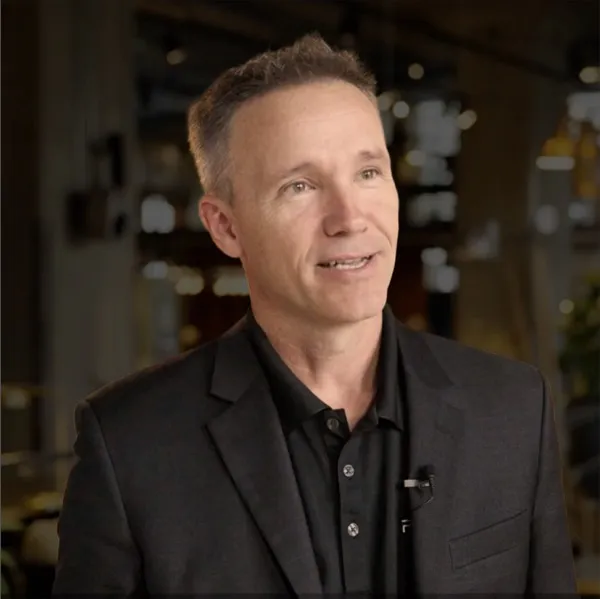
The founder who wrote it. Blaine Mathieu has spent three decades turning emerging technology into business value, as a multi-time CEO, CMO and CPO, with partners including Ford, SoftBank, ABB, TotalEnergies and China State Grid. Before that, he was a Gartner analyst, where the work was vendor-neutral by design. The firm keeps that: it recommends no AI platform, and the implementation stays with the client's own team.
How the firm is built. The River Group is led by Blaine, with a small number of associates who assist him with client work. Like Blaine, everyone who works with clients at The River Group has run companies, functions and P&Ls of their own.
Twenty constraints decide how far an organization can go with AI agents right now, from retrofit to reimagine.
They fall into three: how the work gets done and who does it, what agents know about your organization, and how much of the work runs without a person. We read all twenty every month, so you know which decisions are going stale.
How the work gets done, and who does it.
4 of 8 easier
8 constraints · 2 Got much easier · 2 Got easier · 3 Nothing decisive found · 1 Got harder
What an agent knows about an organization, and how far that knowledge extends.
1 of 3 moved
3 constraints · 1 Got easier · 2 Nothing decisive found
Supervision, autonomy and governance
How much of the work runs without a human, and what catches it when something goes wrong.
6 of 9 harder
9 constraints · 1 Got easier · 2 Nothing decisive found · 3 Got harder · 3 Got much harder
This first reading is the baseline. Everything published after it is measured against where it left things.
The Briefing · Issue 4 · August 2026
One issue a month on what moved in agentic AI and what it changes for the people who run the business, written by Blaine Mathieu, read against The Method.
The AI leaders pulled away in August. Redesigned workflows are the difference.
Two independent datasets caught the same thing in August: the gap between companies getting real value from AI and everyone else is widening fast, and what separates them is not their models or their budgets. It is whether they redesigned the work.
The next open session
AI Realized, a peer network for enterprise executives adopting AI, is hosting Blaine for a half-day session in San Francisco.